
Updated September 2026
Cut a Gem Wiki: Guides, Codes, Gear and Evidence Index
This Cut a Gem Wiki is a practical index for players who want the right guide for the next workshop decision. It groups the site's codes, gear, geodes, totems, and item-acquisition pages by intent, then explains which claims are source-backed, which are player tests, and which should stay unconfirmed until the experience shows better evidence. Start with the task that brought you here, not with a copied list that may have lost its date.
Quick answer
Quick answer
For codes, open the separate Cut a Gem codes guide. For a new workshop run, use the gear guide and homepage priority helper. For a named material, open its route page, such as Moss Crystal or Verdant Shards. For an uncertain value, purity, geode, or totem claim, use the evidence notes and controlled-test steps before treating a number as permanent. This index is the shortest route through the wiki because each page has one job and a visible source boundary.
Choose a Cut a Gem guide by task
Choose a Cut a Gem guide by task
The table keeps the broad wiki intent separate from the focused pages. A page belongs here only when it answers a different question from the homepage planner or an existing guide.
| Your question | Best starting page | What you will get | Boundary |
|---|---|---|---|
| Where is the current code and how do I redeem it? | Cut a Gem Codes | Dated status, reward notes, Store-to-Codes steps, and error checks | A third-party report is not a permanent developer guarantee |
| What should I improve before my next run? | Gear Guide or homepage planner | Role-based upgrade order, machine bottleneck checks, and a run checklist | No invented best-in-slot item or hidden multiplier |
| Which geode or named material should I test? | Geodes, Moss Crystal, or Verdant Shards | A repeatable workshop route, purity/value recording, and troubleshooting | The site does not publish an unverified drop table or fixed price |
| What do totems do and where should one go? | Totems Guide | Effect boundaries, placement tests, and conditional priorities | Exact radius, stacking, and permanent bonus claims need current evidence |
| Can I verify a number before spending resources? | This evidence index plus the linked guide | Source date, in-game observation, and one-variable comparison steps | A screenshot or copied list alone is not a formula |
How to read evidence on this wiki
How to read evidence on this wiki
The official Roblox experience link establishes which game the page describes. It does not automatically prove a code, drop rate, machine multiplier, buyer value, or totem effect. Those claims need a dated first-party statement, a current in-game observation, or a clearly labeled community report. The source ledger records the difference so a useful lead is not mistaken for a guaranteed fact.
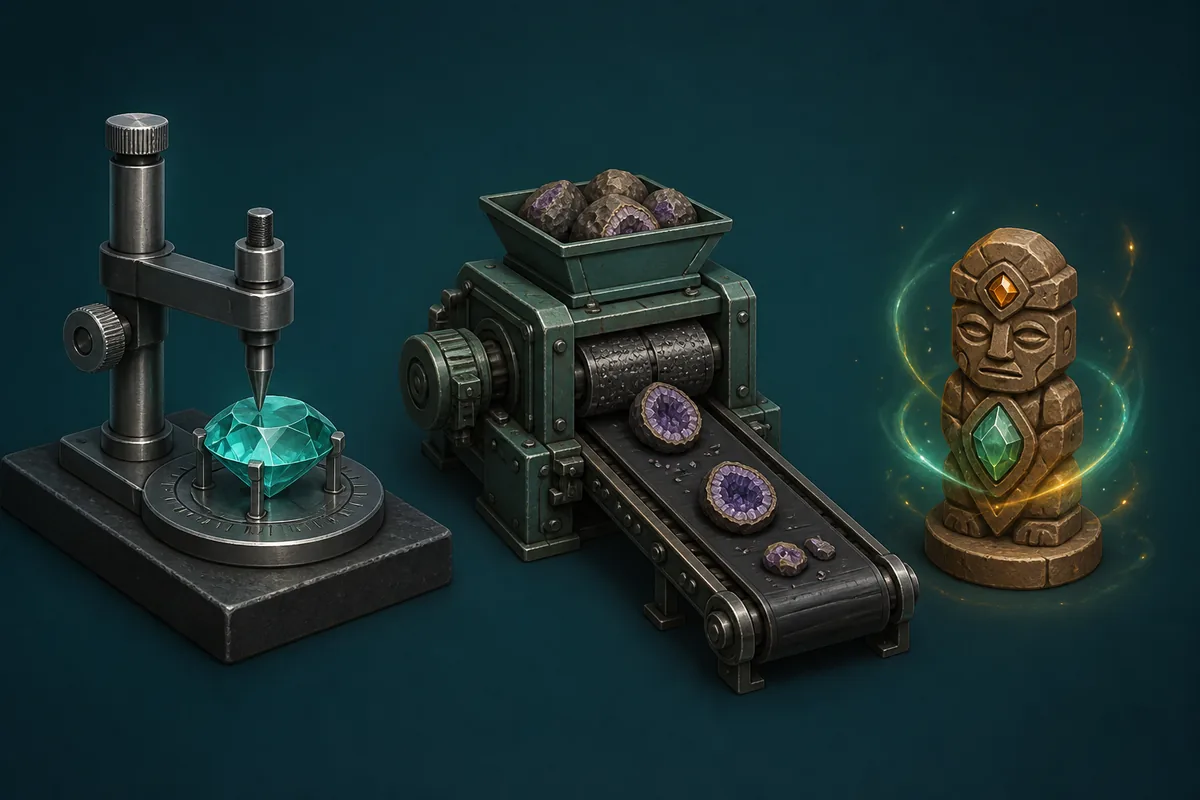
A public description can support the high-level workshop loop: place a grinder and conveyor, process geodes into gems, review buyer offers, and let production continue while offline. It cannot fill in every hidden number. When a page says exact data is unverified, that is a deliberate stopping point. Use the provided test route, record the input, output, date, and update context, then return to the guide when the evidence changes.
Search snippets and videos are discovery signals. They can suggest a code or question worth testing, but a title without a date does not prove that the reward still works for your account. The wiki keeps volatile code status on its own page, item routes separate from gear decisions, and broad navigation here so the same sentence is not repeated across competing URLs.
A safe Cut a Gem Wiki research route
A safe Cut a Gem Wiki research route
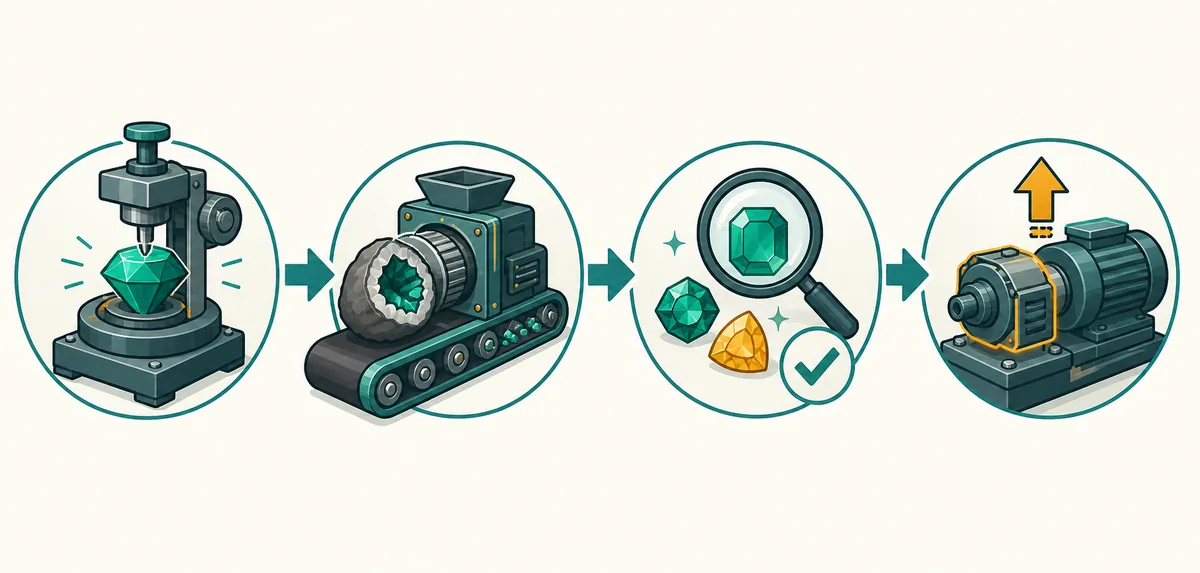
Use this route when an update, video, or community post gives you a claim that is useful but not yet complete.
-
1. Identify the exact question
Write the object and action together: redeem a code, raise a collector level, compare geodes, place a totem, or choose an upgrade. This prevents a broad Cut a Gem search from swallowing a narrower question.
-
2. Open the focused page
Follow the table above to the page with the matching intent. Read its quick answer and source boundary before copying a number into your notes. A focused page is more useful than a giant list when a game update changes one system.
-
3. Separate fact from test
Mark each claim as official, dated third-party report, observed in your run, or unconfirmed. Keep the input and output visible. If two runs use different geodes, machines, or totems, they are not a clean comparison.
-
4. Change one variable
Keep the affordable input and workshop path stable, then change one role. Record purity, result name, buyer offer, machine state, and session date. This makes a small personal test more informative than a lucky single result.
-
5. Re-check after an update
Return to the official experience and the source ledger after a major patch. Move expired code entries, update dates, or newly verified facts to the focused page instead of silently editing every page with a vague claim.
What changes after Cut a Gem updates
What changes after Cut a Gem updates
The game is still moving, so this index treats dates as part of the answer. Codes can expire, rewards can be consumed once, and a machine or totem description can change without preserving an old screenshot. The page labels the last editorial check and links to a source ledger rather than calling every old result latest.
When a new item appears, the first useful addition may be a paragraph or FAQ on an existing route rather than a new URL. A standalone page needs a distinct question, evidence, and enough supporting detail to avoid cannibalizing the homepage, gear guide, geode guide, or codes page. The current wiki index is the right home for navigation; the focused pages remain the right home for procedures.
This is an independent fan guide. Roblox and Cut a Gem belong to their respective owners. Concept illustrations are labeled as editorial aids, and community sources are identified as third-party. That labeling helps you decide what to verify in the live experience before spending a rare resource.
Cut a Gem Wiki FAQ
Cut a Gem Wiki FAQ
What is the Cut a Gem Wiki?
It is a navigation and evidence index for this independent Cut a Gem guide. It sends code, gear, geode, item, and totem questions to focused pages instead of mixing every intent into one list.
Where can I find current Cut a Gem codes?
Open the Cut a Gem codes page. It separates the source-reported active entry from expired entries, gives the redemption path, and explains why a dated third-party status still needs an in-game check.
Does this wiki have a complete Cut a Gem item or geode list?
It links the current geode and item routes, but it does not invent a complete catalog, drop rate, price, or rarity table when public evidence is incomplete. Use the controlled test notes and record what your run shows.
Is there a best Cut a Gem upgrade or totem?
No universal best choice is source-verified here. The gear and totems guides prioritize the bottleneck you can observe, then ask you to compare similar runs after one change.
Can I trust a Cut a Gem video or screenshot?
Treat it as a lead until the date, source, game identity, and in-game result are clear. The page that owns the claim explains what is verified and what remains a test hypothesis.
Is this an official Roblox wiki?
No. It is an independent fan guide. The official Roblox experience is linked for identity, while claims from community guides, videos, and concept visuals are labeled separately.
Summary
Summary
The fastest way through the Cut a Gem Wiki is to match your question to one focused page: codes for redemption, gear for upgrade order, geodes and named materials for acquisition tests, and totems for conditional effects and placement. Use this index when you need to choose the right route or understand why an exact number is not yet published.
Keep the source, date, input, output, and update context with every claim. That habit makes the guide useful when the live experience changes and keeps a related keyword from turning into a duplicate page.
Continue with the guide that matches your next action:
Sources and editorial limits
Sources and editorial limits
These links support experience identity, the public workshop loop, and the site's evidence policy. They do not establish a permanent best item, hidden formula, or guaranteed reward.